The new normal: keeping social distance through occupancy control

As many commercial spaces begin to reopen, there is a growing need for effective, practical ways to maintain social distancing in retail stores and other capacity-limited spaces. Occupancy counting and people counting have long provided retail venues with valuable data on footfall and consumer behavior. Now the technology has become an important tool to help businesses prevent overcrowding, using customer-facing displays to remind people of occupancy limits and when a space is full, helping comply with COVID-19 regulations while saving staff time and easing customer concerns.
Organizations deemed "essential" that kept operating throughout the pandemic have actively improved processes to promote health and safety. Grocery stores and banks installed Plexiglas barriers to strengthen separation between customers and staff. Airlines introduced mask policies for passengers and crew while keeping middle seats empty. Quick-service restaurants increasingly leveraged their drive-through infrastructure, while traditional restaurants shifted demand from dining rooms to curbside pickup and delivery.
While these common-sense precautions have proven largely effective when properly implemented, businesses (and society as a whole) will still need other strategies in the long run, especially as more stores reopen.

Another common-sense approach organizations have adopted is limiting occupancy to keep social distancing feasible. Many organizations have taken steps to measure and control occupancy manually, but soon found the process too inaccurate, cumbersome and costly to implement. FLIR meets this challenge with a scalable, self-contained, automated occupancy monitoring solution suitable for venues ranging from grocery stores, banks and theaters to manufacturing plants and warehouses.
At the core of the FLIR occupancy solution is its Brickstream product portfolio. Brickstream people tracking cameras use best-in-class stereo vision to track occupants anonymously and unobtrusively, protecting consumer privacy while still preventing store overcrowding.
Cameras are mounted on the ceiling above each entrance/exit, and a designated "master camera" calculates occupancy in real time by collecting the entry/exit counts from all cameras at the location. The master camera also serves as the reporting interface, allowing devices on the same network to view a customizable real-time dashboard showing current/available occupancy and related messages. Because the master camera does all the work, no additional processing infrastructure is needed on site or in the cloud.
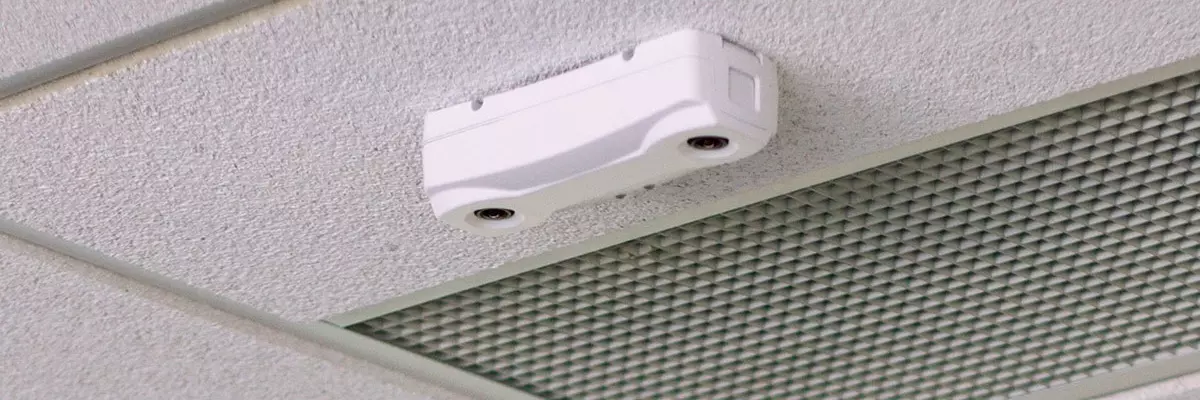
The FLIR occupancy solution uses a standalone IoT architecture in its Brickstream cameras and a BYOD ("bring your own device") architecture for the devices displaying the occupancy dashboard. This BYOD architecture lets users display and monitor location occupancy on almost any device with a web browser, including PCs, laptops, tablets, mobile phones, smart TVs and more, connected (wired or wirelessly) to the same network as the Brickstream cameras.
It supports simple dashboard customization, such as defining maximum occupancy and associated messaging, as well as deeper customization including multi-language support and changes to branding, metrics and layout/appearance. Customer-facing displays remind people of occupancy limits and when a space is full, saving staff time and easing customer concerns.
For setup, pricing or a demo, please call Gold-Pick.